IPO Fever
Bradley Harsch, AIF®
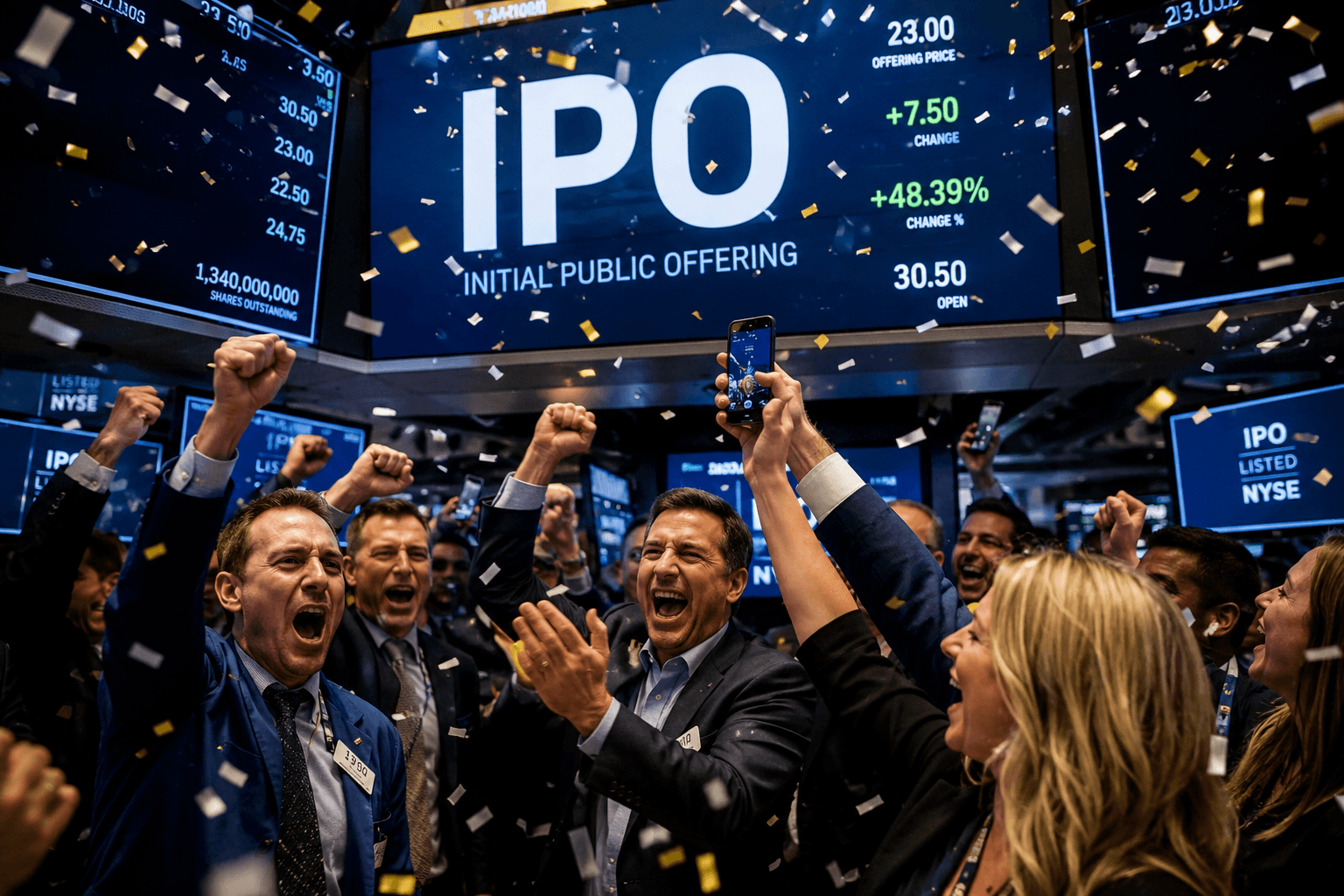
When a company like SpaceX or Anthropic enters the public markets, investor anticipation will likely be extraordinary. And understandably so.
These are not obscure businesses. They are category-defining companies with compelling narratives, powerful brands, and massive perceived upside. But history offers an important warning. Some of the most exciting IPOs in recent memory have also produced some of the most violent price swings.
Consider the pattern:
Snowflake (2020)
One of the most anticipated software IPOs in history.
• IPO price: $120
• Opening trade: approximately $245
• Peak: above $400
• Subsequent decline: over 70%
Rivian (2021)
Electric vehicle excitement drove a euphoric debut.
• IPO price: $78
• Peak: over $170
• Subsequent decline: greater than 90%
Coinbase (2021)
The flagship public proxy for crypto enthusiasm.
• Debut reference price: $250
• Early trading: above $400
• Major decline: roughly 85%
Cerebras (May 14, 2026)
Massive computing contracts with OpenAI and AWS
• IPO price: $185
• Peak: approximately $350
• Price on May 26 (12-days later) $241
The issue isn’t that IPOs are bad investments. The issue is that investors often confuse business admiration with disciplined investing. Those are entirely different things.
A disciplined investor enters with answers to specific questions:
What is my entry framework?
Will I buy immediately? Wait 30 days? 90 days? After lockup expiration?
What is my position-sizing discipline?
Will this be 1% of capital? 3%? A speculative sleeve only?
What is my exit discipline?
What would make me trim, hold, or admit I was wrong?
Without those answers, IPO investing becomes emotional improvisation.
A more disciplined approach could look like this:
Stage 1: Let the initial excitement settle
Opening day price discovery is often emotional, not rational.
Stage 2: Watch lockup expiration periods
Early insiders eventually gain the ability to sell. That can create meaningful supply pressure.
Stage 3: Let fundamentals emerge
Public reporting creates clarity that private-market narratives often lack.
Stage 4: Scale, don’t lunge
If conviction exists, build exposure intentionally rather than making a binary bet.
When SpaceX debuts on June 12th, it may become an extraordinary public investment. Anthropic, expected IPO in October 2026, may reshape an entire industry. But extraordinary companies do not eliminate the need for discipline.
Because the most dangerous investment decision is rarely buying the wrong company.
It’s buying the right company for the wrong reason...at the wrong price.